

Is the interferometer’s output accuracy insufficient? The UPECS ultra-precision environmental control system from Jice restores environmental accuracy.
Release time:
2026-04-29
The Jice High-Precision Environmental Control System (UPECS) enhances interferometer accuracy by customizing the microenvironment, addresses temperature-control challenges, and improves measurement reliability and delivery quality.
Interferometers in optical enterprises serve a dual purpose: in-house metrology and external delivery. However, temperature control has long been a limiting factor on the upper bound of measurement accuracy. Interferometric measurements are highly sensitive to temperature: the refractive index of air varies with temperature, causing drift in optical path difference, which in turn leads to fringe jitter, poor data repeatability, and a significant degradation in surface figure accuracy. Many companies have attempted to build their own temperature-controlled environments, employing a combination of air conditioning, constant-temperature chambers, and localized air curtains; yet in practice, stable operation remains challenging, particularly when equipment generates heat, personnel enter and exit, or seasonal transitions occur, resulting in persistent fluctuations in the temperature profile.
The root of this problem lies not in the interferometer’s lack of sophistication, but in the mismatch between the instrument and its microenvironment. Placing an interferometer in a temperature-controlled space with unstable thermal conditions is akin to setting a precision balance on a vibrating tabletop: no matter how accurate the instrument, the environment will hold it back.
JiCe High-Precision Environmental Control System UPECS
Its positioning is precisely to address this situation. "Advanced equipment, lagging environment" of mismatch. It is not a central air-conditioning system serving the entire workshop; rather, it creates an independent, stable, and controllable microenvironment in the interferometer’s location. Temperature stability reaches ±0.002℃ This level of temperature stability exceeds the requirements of most optical companies by an order of magnitude, providing ample margin for precision. The system employs a proprietary temperature-control algorithm in conjunction with localized air-bath modules to precisely regulate the heating zones, rather than relying on the crude, whole-room cooling approach.

For enterprises that balance in-house production and use with external testing services, this level of accuracy delivers real-world value. Internally, interferometric measurement data are stable, providing a solid basis for process adjustments; externally, during customer factory audits and third-party verifications, environmental parameters stand up to scrutiny, ensuring that delivered results are robust and defensible. Only when temperature control shifts from “good enough” to “truly controllable” can the interferometer fully realize its designed precision.
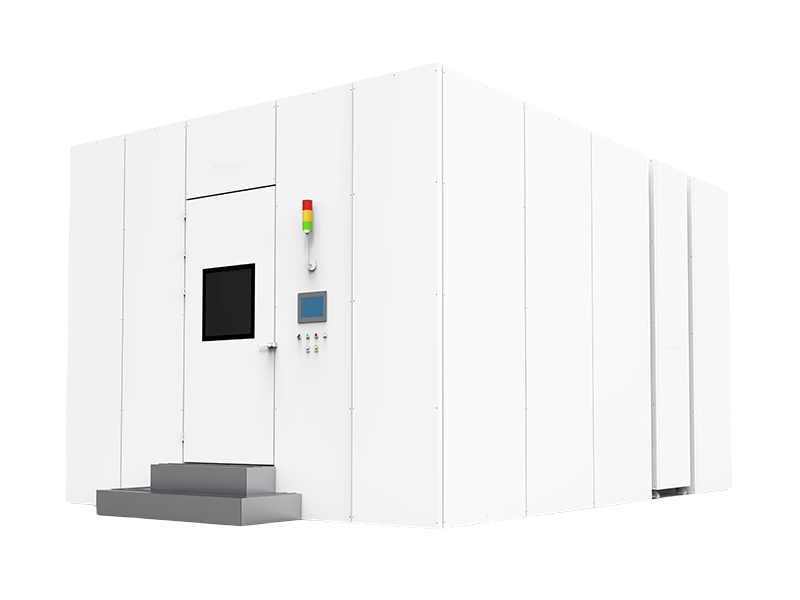
UPECS’s modular architecture is well-suited to this application. Given the varying interferometer layouts and spatial constraints across different enterprises, the system can be customized on demand to include main cabinets, air-flow circulation, filtration, cooling, and localized control units, enabling seamless integration with existing production lines or inspection stations without requiring major modifications to the facility for HVAC installation.
In the optics industry, competition may appear to hinge on material formulations and manufacturing processes, but at its core it comes down to measurement capabilities. And the bottleneck in these capabilities often lies in environmental control. Only by stabilizing the microenvironment can interferometer data be trusted, can process iterations be guided, and can we deliver with confidence. That is precisely what Jice’s ultra-precision environmental control system, UPECS, sets out to address.
UAC300 High-Precision Environmental Control System

UBA300 High-Precision Environmental Control System

UAA300 High-Precision Environmental Control System
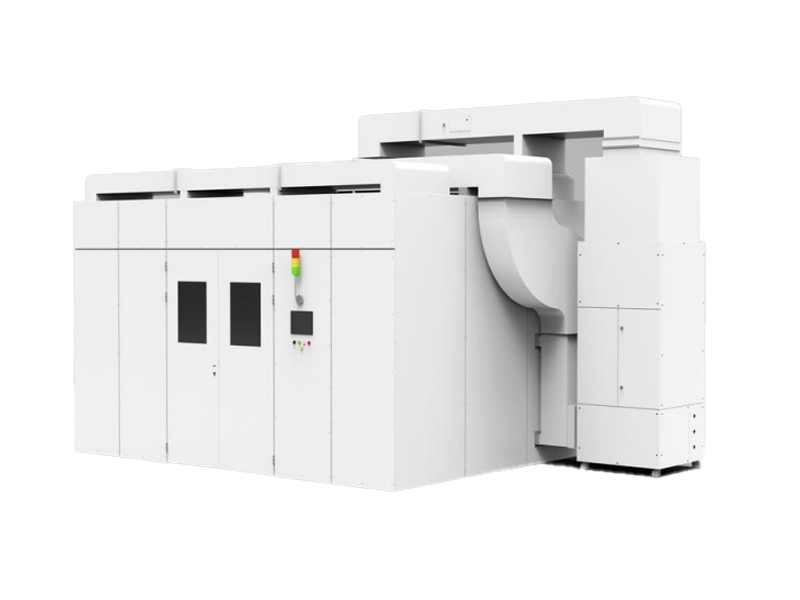
UCB100 High-Precision Environmental Control System

UCC100 High-Precision Environmental Control System

UCC100 High-Precision Environmental Control System

UBA200 High-Precision Silent Environmental Control System
Here is the title one h1 placeholder text
More news

Service Hotline
E-mail:info@jicenj.com
Address: Block D, Tengfei Building, 88 Jiangmiao Road, Yanchuang Garden, Jiangbei New District, Nanjing City
Copyright © 2024 JICE(Nanjing) Technology Co., LTD