

Lithography Machine Environmental Control System: A Precision Assurance for Semiconductor Manufacturing
Release time:
2026-05-13
The Jice High-Precision Environmental Control System, UPECS, extends precision control from the room‑level to the equipment level, providing stable, reliable, and repeatable ultra‑precise environmental support for advanced lithography processes.
In the semiconductor chip manufacturing process, lithography is the most technically demanding and critically impactful step. A single wafer typically undergoes 20 to 30 lithographic exposures, with lithography accounting for 40% to 50% of the total fabrication time and roughly one-third of the overall chip‑manufacturing cost. As the core equipment of the lithography process, the lithography tool epitomizes the highest level of technological sophistication in semiconductor manufacturing, representing 25% of total capital investment in integrated circuit fabrication equipment. To ensure stable operation and high‑precision imaging, a stringent environmental control system is indispensable—this constitutes the fundamental prerequisite for maintaining the stability of the lithography process.
I. Main Categories of Lithography Machines
There are numerous ways to classify lithography machines; the most common industry‑standard criteria are whether a mask is used and the type of exposure light source.
Classification based on whether a mask is used
1. Mask lithography Reliance on photomasks to accomplish pattern transfer is the mainstream technology route for current chip mass production, and it can be categorized into three forms:
● Contact lithography: The mask is brought into direct contact with the photoresist‑coated wafer. This method features a simple apparatus and relatively high resolution, but it can easily lead to damage and contamination of both the mask and the wafer, resulting in a low yield and making it unsuitable for mass production.
● Proximity lithography: The mask is kept at a very small gap from the wafer to prevent direct contact and damage, but the imaging resolution is susceptible to airflow, resulting in limited overall precision.
● Projection lithography: It uses optical lenses to form images, with no physical contact between the mask and the wafer, resulting in higher precision and reliability. Depending on the motion mechanism, it is further classified into scanning projection, step-and-repeat, and step-and-scan types; among these, step-and-scan is the mainstream architecture for high-end lithography tools.
2. Maskless lithography No photomask is required; patterning is achieved directly via beam writing or nanoimprinting, making it well suited for R&D and small‑batch manufacturing.
● Direct-write lithography: Includes laser direct writing, electron-beam direct writing, and ion-beam direct writing, in which the beam trajectory is controlled by a computer to achieve pattern transfer.
● Nanoimprint lithography: By combining imprinting molds with UV curing, it enables pattern replication and offers the advantages of low cost and high resolution.
Classification by Exposure Light Source
Based on the wavelength of the light source, lithography tools can be classified into three categories: ultraviolet (UV), deep ultraviolet (DUV), and extreme ultraviolet (EUV). The shorter the wavelength of the light source, the more advanced the corresponding process node that can be achieved.
II. Components of the Lithography Machine’s Core System
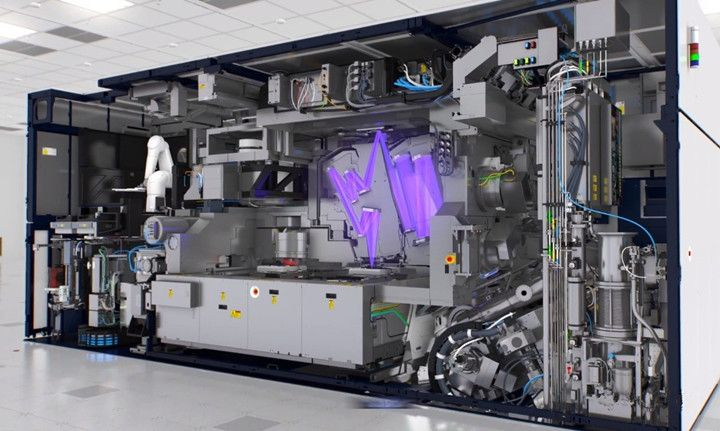
Lithography machines are sophisticated systems that integrate optics, mechanics, electronics, software, and environmental control. Their core architecture comprises multiple functional modules:
● Light source system: It provides the exposure energy required for lithography and is a core component of the equipment.
● Lighting system: Achieves beam expansion, homogenization, and shaping to provide stable illumination for the mask.
● Projection objective system: Composed of 20 to 30 optical elements, it reduces and precisely projects the mask pattern onto the wafer while correcting various optical aberrations.
● Dual-stage system: enables synchronous motion, stepping, and alignment between the mask stage and the wafer stage.
● Leveling and focusing system: Adjusts the wafer position to ensure the exposure surface is aligned with the optimal focal plane.
● Alignment System: Enables precise overlay of the mask pattern with the existing pattern on the wafer.
● Environmental Control System: Controls parameters such as temperature, humidity, cleanliness, vibration, and electromagnetic interference to ensure stable equipment operation.
III. Core Metrics for Environmental Control in Lithography Tools
Lithography processes achieve nanometer‑scale precision and are highly sensitive to fluctuations in environmental conditions. Parameters such as temperature, humidity, atmospheric pressure, cleanliness, and the electromagnetic environment directly determine imaging quality and chip yield.
1. Temperature Control
● Temperature fluctuations can alter photoresist performance, induce thermal deformation of optical components, and degrade mechanical positioning accuracy, thereby leading to pattern distortion, overlay errors, focus drift, and other issues. For the lithography tool’s core components—including the projection objective, the wafer, and the mask‑adjacent regions—temperature must be tightly controlled within a range of **22°C ± 0.005°C**. Temperature control is broadly categorized into two approaches: medium‑based temperature regulation, which uses ultrapure water as the constant‑temperature medium and employs recirculating heat exchange to regulate the temperatures of the lens, the stage, the motor windings, and other components.
● Direct temperature control: For confined spaces such as the periphery of the mask, Peltier semiconductor cooling technology is employed to achieve precise temperature regulation.
2. Humidity Control
The humidity in the lithography workshop must be maintained at 20% to 35% RH . Too low a humidity can cause the photoresist to dry out and crack, leading to bubble formation and static electricity; too high a humidity can result in a thicker resist layer, reducing pattern resolution and increasing the difficulty of thermal management.
3. Pneumatic Control
The projection objective is a high-precision optical assembly weighing 500 kilograms and measuring over one meter in length. To ensure imaging quality, internal air pressure fluctuations must be kept within Within 100 pascals , with temperature fluctuations less than 0.01℃, to prevent atmospheric pressure changes from affecting the optical path and imaging accuracy.
4. Cleanliness Control
Microscopic particles, acidic substances, alkaline substances, ammonia, sulfides, organic pollutants, and other contaminants in the air can all lead to defects in semiconductor chips. The operating environment of lithography equipment must meet… ISO 14644-1 Classes 1 to 5 Cleanliness requirements: Key process areas are typically equipped with microenvironment systems to further enhance the cleanliness class.
5. Electromagnetic Shielding
Electron-beam lithography relies on an electron beam to write patterns; external electromagnetic fields can deflect the beam, leading to pattern distortion, thus necessitating a robust electromagnetic shielding system.
IV. Technical Challenges in Environmental Control
The core challenge in lithography machine environmental control lies in… Coupling Effects of Multiple Physical Quantities Temperature and humidity are interrelated: changes in temperature alter the saturation vapor pressure of air, thereby affecting relative humidity; high-humidity environments reduce heat dissipation efficiency and increase the difficulty of temperature control. Moreover, temperature control exhibits characteristics such as time delay, time-variability, and nonlinearity. Maintaining temperature stability at the millikelvin level further requires isolating multiple sources of disturbance, including vibration, minute thermal leaks, and electromagnetic interference, making the technology extremely challenging.
Overall, the environmental control system is a fundamental prerequisite for lithography machines to achieve high‑precision, high‑stability patterning, and it also represents one of the most critical technological barriers in the manufacturing of advanced lithography equipment. In response to the ongoing demand for enhanced microenvironmental control in high‑end lithography and precision metrology tools, the industry has already introduced specialized environmental control solutions that meet even more stringent standards.

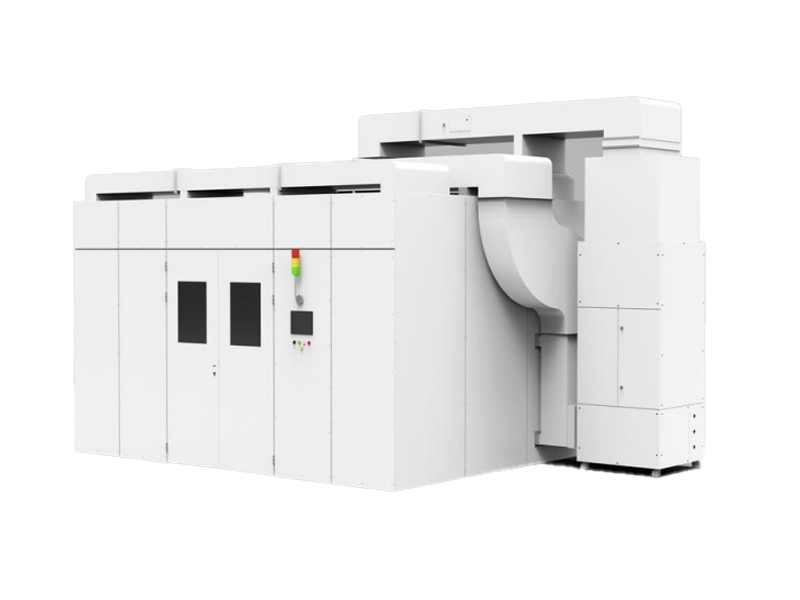
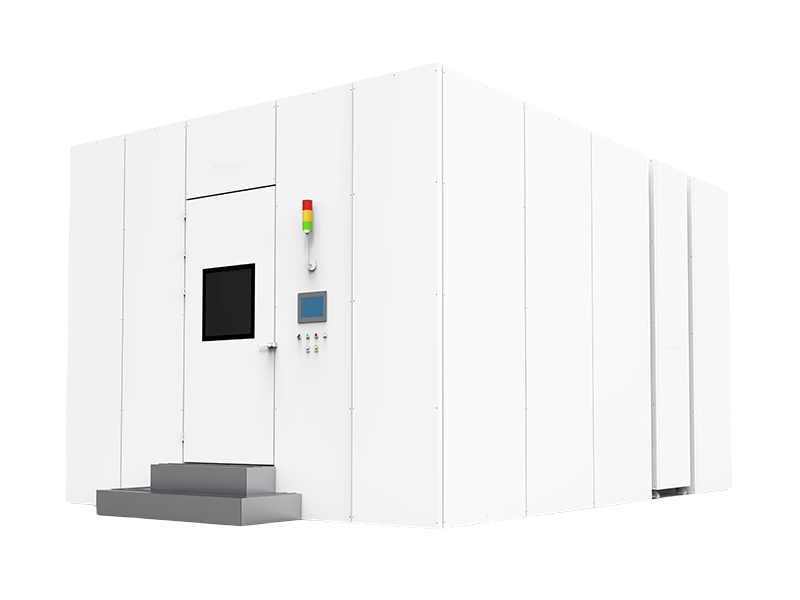
UPECS (Ultra‑Precision Environmental Control System), a high‑precision environmental control system independently developed by Jice (Nanjing) Technology Co., Ltd., delivers equipment‑level microenvironment control for advanced semiconductor tools such as lithography machines, effectively meeting the stringent environmental requirements of critical components—including projection lenses, stage systems, and mask areas. Featuring a modular architecture and a vertical unidirectional airflow design, coupled with CFD‑based airflow simulation and optimization, the system achieves temperature stability of up to ±0.002°C, humidity stability of ±0.1% RH, and cleanliness levels as high as ISO Class 1. It also offers vibration isolation, low noise, and localized air‑bath–based point‑control temperature regulation, enabling deep integration with lithography machine frames and optical paths to mitigate thermal drift, particulate contamination, and humidity fluctuations—factors that can degrade imaging and overlay accuracy. By advancing from room‑level environmental control to precise equipment‑level regulation, UPECS provides a stable, reliable, and repeatable ultra‑precise environmental foundation for cutting‑edge lithography processes, helping high‑end semiconductor equipment maintain consistent, robust performance even under demanding operating conditions.




Here is the title one h1 placeholder text
More news

Service Hotline
E-mail:info@jicenj.com
Address: Block D, Tengfei Building, 88 Jiangmiao Road, Yanchuang Garden, Jiangbei New District, Nanjing City
Copyright © 2024 JICE(Nanjing) Technology Co., LTD