

When the environment is no longer a variable—how does UPECS, the ultra‑precise environmental control system, ensure the stability and repeatability of precision equipment?
Release time:
2026-06-30
The Jice High-Precision Environmental Control System, UPECS, enhances equipment stability, reduces scrap rates, and ensures measurement accuracy and yield through precise environmental control.
Every piece of precision equipment is battling against its environment.
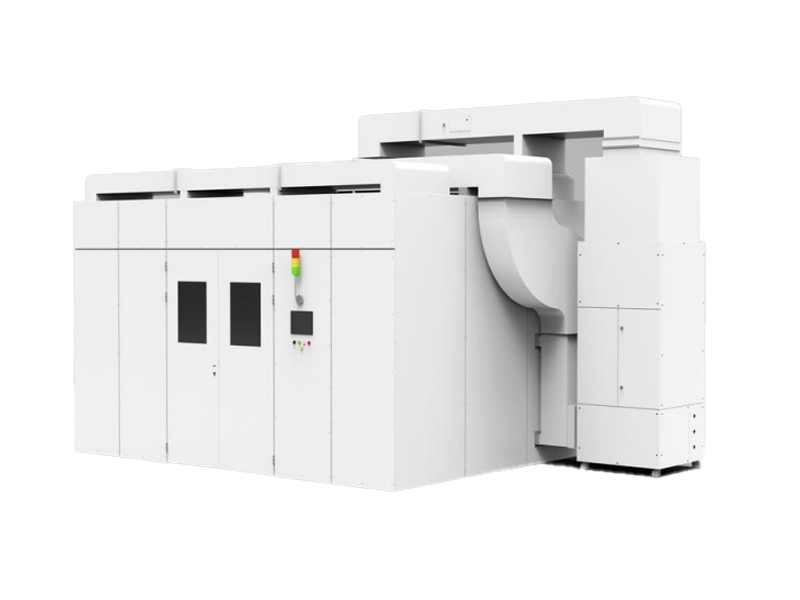
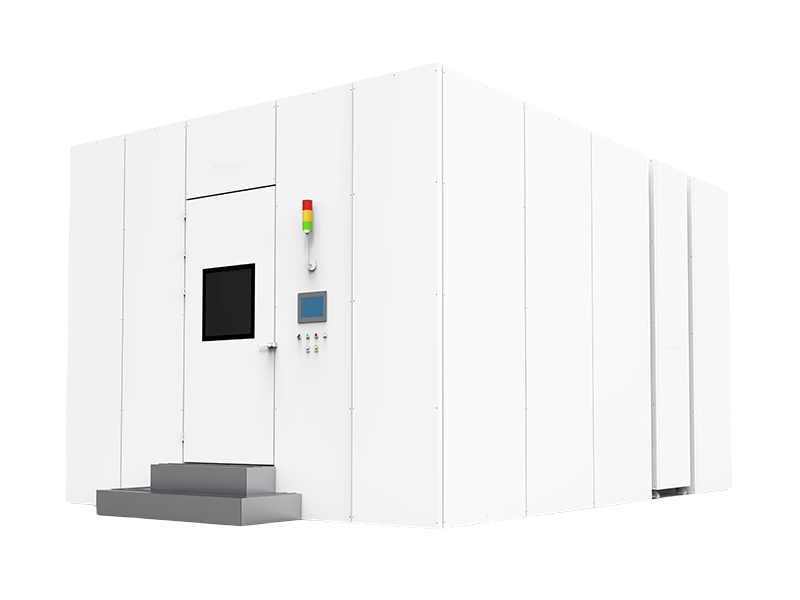
Temperature instability is the most insidious enemy of all precision processes. Thermal expansion and contraction spare no equipment: the objective lens of a lithography tool loses focus due to thermal drift, the reference mirror of an interferometer deforms under temperature gradients, and the alignment fiducials of a pick-and-place machine shift in response to fluctuations on the order of millikelvins. JiCe High-Precision Environmental Control System UPECS It can maximize the stability of air temperature in the core area to ±0.002℃ …by compressing thermal disturbances below the device’s detection threshold at the media level. Once temperature—the most significant variable—is stabilized, device drift naturally diminishes, and measurement results begin to converge—yield becomes more consistent, and measurements grow more accurate. This is precisely the outcome that customers are willing to pay for.

The problems caused by humidity fluctuations are equally insidious and costly. Too low a humidity can lead to electrostatic discharge that damages sensitive components; too high a humidity can result in condensation on optical surfaces, causing irreversible damage; and repeated fluctuations subject hygroscopic materials to continuous cyclic expansion–contraction fatigue. JiCe High-Precision Environmental Control System UPECS The humidity stability can be controlled up to ±0.1% RH By confining the moisture content of the process environment within a sufficiently narrow range, electrostatic risks, condensation thresholds, and material‑property fluctuations are reduced, thereby widening the process window.
Cleanliness is the baseline for precision manufacturing, yet many customers’ pain points lie not in overall environmental cleanliness but in localized conditions. JiCe High-Precision Environmental Control System UPECS The cleanliness level can extend to ISO Class 1 A top‑level localized clean‑room barrier is established at the equipment’s working interface, minimizing the likelihood of particulate contamination and surface defects. The reduction in scrap rates not only translates into cost savings but also significantly lowers the frequency of quality disputes and line stoppages caused by misjudgments.
Environmental vibrations and airflow disturbances are equally critical factors in precision metrology and micro‑ and nano‑fabrication. An interferometer operating at the nanometer scale can have its optical path difference drift beyond acceptable limits even from a faint floor vibration; similarly, a probe station that performs submicron‑scale positioning can have its tip deviate from the target due to even the slightest turbulence. JiCe High-Precision Environmental Control System UPECS By coupling the design of a rigid structure with optimized airflow management, external disturbances are isolated from the core work area, ensuring that weak signals are not obscured by ambient noise.
JiCe High-Precision Environmental Control System UPECS Built around a domestically developed subsystem, this solution not only matches world‑class performance metrics but also frees customers from the passive reliance on a single imported supply channel, mitigating the risks of long‑term import dependence, unpredictable lead times, slow after‑sales response, and acute geopolitical uncertainties. Supply chain security is not merely a bonus listed in tender documents; it is a tangible reality embedded in day‑to‑day delivery, installation, and post‑sale maintenance.
Stability and measurement repeatability are at the heart of the equipment. JiCe High-Precision Environmental Control System UPECS What we do is employ temperature control within ±0.002°C, humidity regulation at ±0.1% RH, and an ISO Class 1 clean barrier to create a stable microenvironment for each core piece of equipment, significantly boosting both production capacity and product quality.




Here is the title one h1 placeholder text
More news

Service Hotline
E-mail:info@jicenj.com
Address: Block D, Tengfei Building, 88 Jiangmiao Road, Yanchuang Garden, Jiangbei New District, Nanjing City
Copyright © 2024 JICE(Nanjing) Technology Co., LTD