

The cleanroom has met the standards—so what about the microenvironment of the core equipment? — How Jice UPECS achieves precision environmental control at the equipment level.
Release time:
2026-07-30
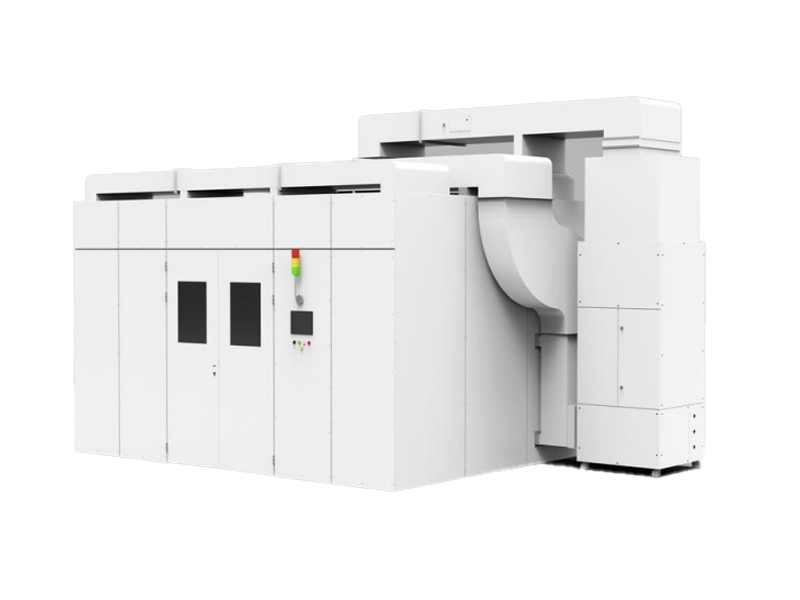
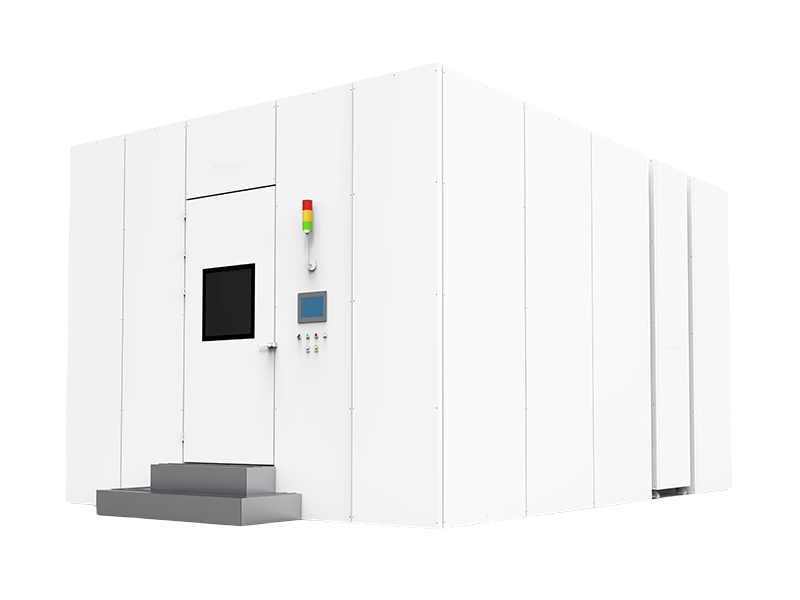
For enterprises that have already built cleanrooms and temperature‑controlled workshops, how can environmental precision be extended to the interior of core equipment? UPECS offers a “last‑mile” precision environmental control solution for critical machinery.
From project initiation to acceptance, a cleanroom or temperature‑controlled workshop often entails capital investments running into tens of millions, even hundreds of millions, along with a construction and commissioning period lasting more than a year. While these facilities address the “macro environment,” what truly determines product yield and process repeatability is the micro‑environmental precision within the core equipment—specifically, whether the temperature field in the few cubic meters surrounding the lithography objective can be maintained at millikelvin‑level uniformity, whether humidity fluctuations at inspection stations might cause condensation on optical surfaces, and whether the cleanliness of precision assembly areas can remain compliant with their specified class despite localized disturbances generated during equipment operation. The macro environment provides the baseline conditions; the micro environment dictates the final outcome. The gap between the two is precisely… JiCe High-Precision Environmental Control System UPECS To be filled.

Such customers typically have already made substantial investments in their infrastructure: the cleanroom’s air supply volume, cooling capacity, and piping layouts are all designed to meet the overall process requirements. However, the environmental control demands of the core equipment often exceed the design capabilities of the general room environment. For example, while a Class 1,000 cleanroom can maintain an overall temperature fluctuation within ±1°C, a high‑precision testing instrument inside may require a localized temperature field with a tolerance of ±0.01°C—something that cannot be addressed simply by increasing the cleanroom’s HVAC system output. Instead, it calls for an independent, equipment‑specific precision environmental control subsystem to perform “secondary fine‑tuning.” The design philosophy behind Jice UPECS is precisely tailored to this scenario: building on the existing room‑level infrastructure, it elevates the environmental parameters at the critical location housing the core equipment from “workshop‑level accuracy” to “equipment‑level precision”—achieving temperature stability of ±0.002°C, humidity stability of ±0.1% RH, and cleanliness levels meeting ISO standards. Level 1: Enables existing cleanroom investments to unlock process‑level value at critical workstations—value that was previously unattainable.
This extension—from the macro‑environment to the micro‑environment—delivers quantifiable process improvements. Take semiconductor metrology and optical assembly as examples: with temperature‑field stability improved from ±1°C to the ±0.01°C range, measurement drift and assembly errors caused by thermal expansion are reduced by several orders of magnitude; and with humidity controlled within ±0.1% RH instead of ±10% RH, the risk of condensation on optical surfaces is transformed from a probabilistic occurrence into a manageable engineering variable—factors that directly impact first‑pass yield and factory‑acceptance rates in high‑end lens coating and precision optical‑path alignment. Crucially, these enhancements do not require dismantling or rebuilding the cleanroom; instead, they can be achieved by deploying a UPECS subsystem at key workstations that seamlessly integrates with the existing macro‑environment, unlocking higher process limits from the existing infrastructure with minimal additional investment.
The macro environment sets the foundation, while the micro environment determines precision—these two are never mutually exclusive. UPECS from Jice enables companies that have already invested heavily in cleanliness and temperature control to extend environmental precision to where it matters most—right next to critical equipment, above key workstations, and within the few cubic meters that most significantly impact yield—without having to start from scratch. Only by bridging this final mile, from the entire facility down to the individual machine, can precision environmental control investments achieve a truly closed-loop return.




Here is the title one h1 placeholder text
More news

Service Hotline
E-mail:info@jicenj.com
Address: Block D, Tengfei Building, 88 Jiangmiao Road, Yanchuang Garden, Jiangbei New District, Nanjing City
Copyright © 2024 JICE(Nanjing) Technology Co., LTD