

Maintaining overlay accuracy and critical dimensions, Jice’s UPECS ensures yield‑driven delivery through equipment‑level precision environmental control.
Release time:
2026-08-18
Variations in overlay accuracy, CD, yield, and image quality often stem from environmental factors. The UPECS system delivers equipment‑level precision environmental control with a stability of ±0.002°C.
In semiconductor manufacturing and precision optics, several key metrics consistently occupy the center of process discussions: overlay accuracy, critical dimension control, image quality and surface‑figure stability, and yield. Though these metrics pertain to distinct process modules and are assessed using different measurement techniques, they share a often‑underestimated yet critical source of variability—environmental conditions. Temperature, humidity, and cleanliness—seemingly “infrastructure‑level” factors—once process node dimensions shrink into the nanometer regime, cease to be mere background variables and instead become active contributors to the fluctuations of each metric.
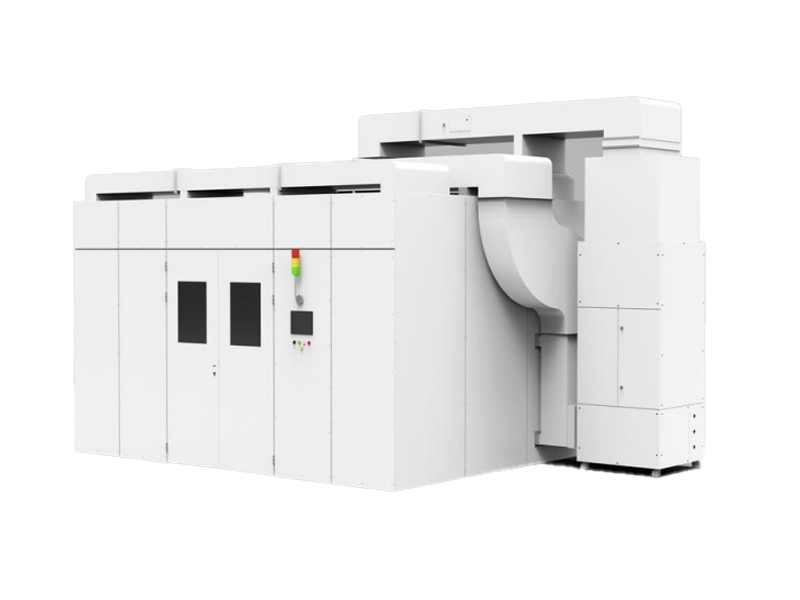
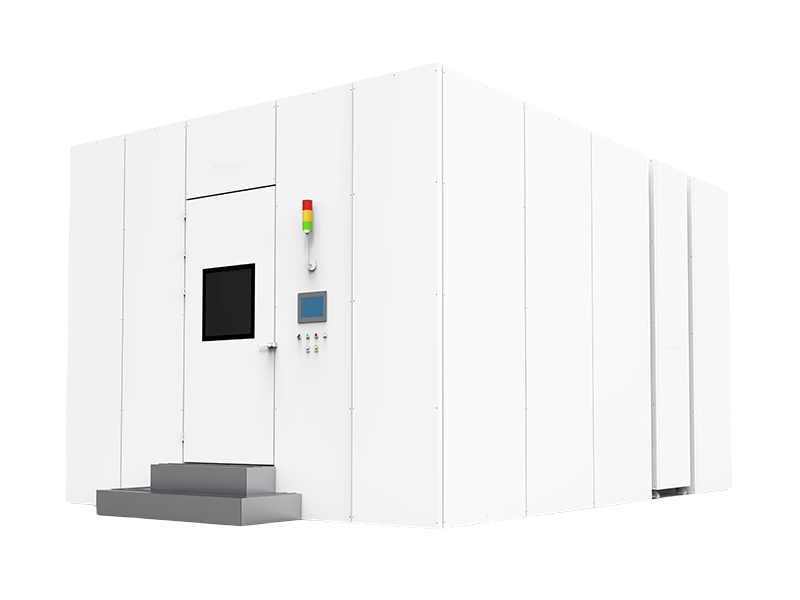
During lithography, the wafer, the photomask, and the stage all undergo slight thermal expansion and contraction as temperature changes. Although these variations are imperceptible to the naked eye, they can still cause shifts in the alignment of patterns on the wafer, thereby compromising overlay accuracy. Extreme Measurement (Nanjing) Technology Co., Ltd.’s High-Precision Environmental Control System UPECS , as a core component of lithography machines, can maintain the temperature at ±0.002℃ It can establish a uniform, stable microenvironment within the wafer exposure area, mitigating thermal drift and airflow disturbances, thereby enhancing overlay accuracy and stability.

Critical dimension (CD) is equally sensitive to fluctuations in temperature and humidity. Temperature variations can alter the photoresist coating thickness, exposure response, and development rate, leading to degraded linewidth uniformity across different locations on a wafer and causing inter‑batch CD drift. Meanwhile, humidity fluctuations affect the evaporation rate of solvents in the photoresist and the adhesion between the resist layer and the wafer surface, while also potentially exacerbating electrostatic charge buildup, thereby compromising the accuracy of precision metrology. The UPECS ultra‑high‑precision environmental control system delivers temperature stability of up to ±0.002°C and humidity stability of ±0.1% RH at critical process stations such as spin coating, exposure, and development. By maintaining stable temperature and humidity conditions in these process zones, it effectively suppresses CD variability and enhances CD uniformity both across different locations on a wafer and between batches. From an environmental control perspective, this approach minimizes the impact of temperature and humidity—two major sources of environmental disturbance—on CD uniformity, thereby significantly reducing the reliance on operator‑dependent empirical compensation for batch‑to‑batch CD consistency.
Image quality and the surface‑form stability of optical components are highly sensitive to local temperature fluctuations. During exposure or metrology, even small temperature differences near the projection lens, inspection microscopes, and large‑aperture optical elements can alter the refractive index distribution of the air and induce thermal deformation on the optical surfaces, leading to imaging errors or drift in measurement data. Conventional cleanroom HVAC systems can only maintain a uniform room‑level temperature, making it difficult to effectively detect and mitigate localized temperature gradients around optical cavities. The Jice High‑Precision Environmental Control System, UPECS, can establish an independent, uniform, and stable temperature and airflow environment within the optical cavity—tailored to the equipment’s architecture and actual heat‑generation profile—thereby minimizing the impact of air turbulence and thermal distortion on the optical path and ensuring long‑term stability of interferometric measurement data. In addition, the system achieves ISO Class 1 cleanliness, reducing particle contamination and damage to optical surfaces.
Yield is the ultimate outcome of the cumulative effects of all the aforementioned factors. Even seemingly isolated incidents—such as un-detected overlay misalignment, critical surface particle contamination, or electrostatic adsorption occurring during periods of uncontrolled humidity—though each has a low individual probability, can accumulate across hundreds of process steps and manifest as increased defect density, thereby eroding yield. When yield fluctuates, inadequate precision in environmental monitoring data or sensor placement that fails to align with actual process zones can make it difficult to determine whether the fluctuations stem from abnormal temperature, humidity, or cleanliness levels. As a result, the root cause is often attributed only to “process variability,” obscuring the true impact of environmental factors. The UPECS ultra‑high‑precision environmental control system addresses this by deploying independent sensors at multiple critical locations within core process stations, according to user requirements, to continuously record real‑time temperature, humidity, and cleanliness data. When yield anomalies occur, it enables rapid identification of potential environmental changes, providing accurate evidence for troubleshooting and process optimization.
From registration accuracy to critical dimensions, and from image‑quality stability to final yield, the UPECS solution delivered by Jice goes beyond a set of ±0.002°C or ISO Class 1 specifications—it provides a system‑level approach that brings environmental control down from the fab‑wide level to the equipment level, ensuring that the environmental conditions for every precision process step can be defined, controlled, and verified just like process parameters.




Here is the title one h1 placeholder text
More news

Service Hotline
E-mail:info@jicenj.com
Address: Block D, Tengfei Building, 88 Jiangmiao Road, Yanchuang Garden, Jiangbei New District, Nanjing City
Copyright © 2024 JICE(Nanjing) Technology Co., LTD