

Can’t reproduce the data, and the drift persists after power‑on? UPECS from Jice ensures the repeatability and signal‑to‑noise ratio of R&D measurements.
Release time:
2026-08-20
Poor repeatability, irreproducible data, excessive noise, and power‑on drift… The JiCe UPECS delivers a verifiable environmental control solution with stability of ±0.002°C.
In precision measurements and R&D experiments, these issues repeatedly surface in experimental records and project retrospectives: repeatability falls short of specifications, with results from two measurements under identical conditions failing to match; data cannot be reproduced—curves that emerged last week simply refuse to appear this week; signal noise is excessively high, leaving the useful signal buried beneath inexplicable baseline fluctuations; and drift upon startup is severe, requiring one to two hours after power-up before formal data acquisition can begin. All of these problems share a common characteristic— The problem lies in the environment.
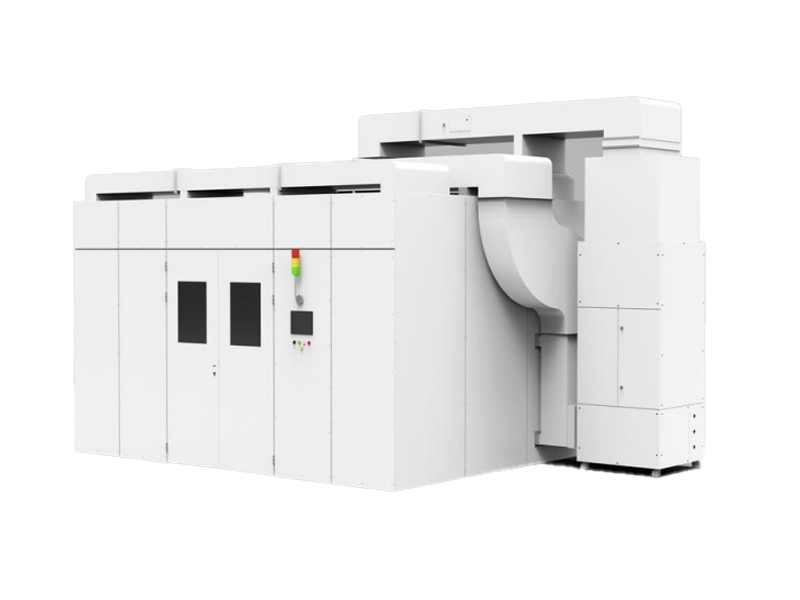
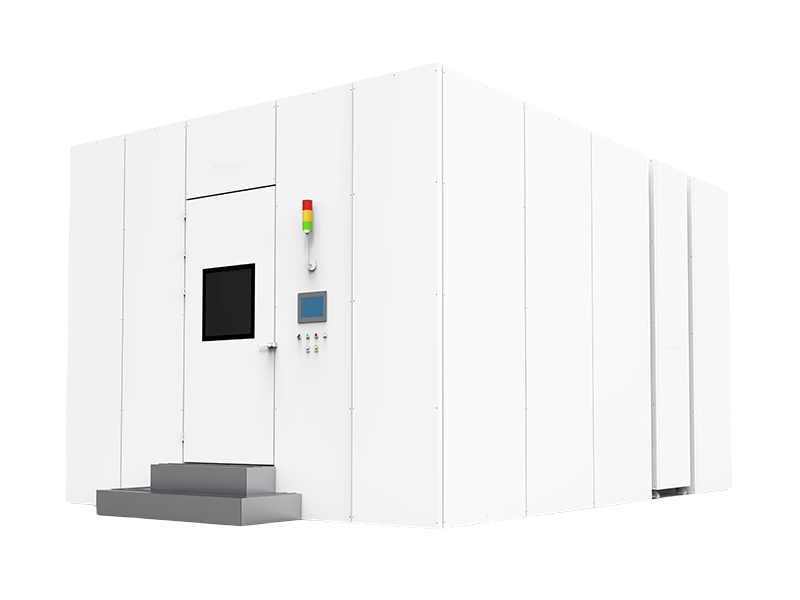
The Jice Environmental Control System, UPECS, ensures more stable measurements.
Repeatability is one of the key metrics for assessing the reliability of precision measurements, yet fluctuations in temperature and humidity can directly introduce measurement noise and drift, thereby degrading repeatability. Precision instruments such as laser interferometers, nanoindenters, and scanning probe microscopes feature internal optical and mechanical structures that are highly sensitive to temperature variations. Temperature fluctuations can induce nanoscale thermal deformations in metallic components, leading to shifts in the optical path or alterations in optical alignment, which in turn result in inconsistent measurement outcomes for the same specimen across multiple trials and a decline in repeatability. Meanwhile, changes in humidity can modify the adsorption states on optical surfaces and alter the surface properties of samples, and may also cause performance drift in critical actuator components like piezoelectric ceramics, further exacerbating measurement deviations. High-Precision Environmental Control System UPECS by Jice (Nanjing) Technology Co., Ltd. The temperature stability of the measurement area can be locked within a window of ±0.002°C, and the humidity stability can be locked within ±0.1% RH, providing a stable environment for measurements and enhancing instrument repeatability and measurement reliability.

Reducing noise in weak-signal measurements
In the measurement of weak signals at the microvolt and picoampere levels, even slight temperature variations can introduce significant interference. Temperature fluctuations alter the dark current of photodetectors and shift the operating point of amplifiers, leading to baseline drift. Moreover, temperature differences between dissimilar metal junctions in the measurement circuit give rise to additional thermoelectric potentials via the Seebeck effect. This interference overlaps with the true measurement signal in the frequency domain, making it difficult to eliminate effectively through post‑processing filtering.
The Jice High-Precision Environmental Control System, UPECS, creates a uniform and stable micro‑environment around critical equipment by optimizing airflow management and precisely controlling local temperatures. This approach mitigates thermoelectric interference caused by temperature fluctuations at the source, thereby enhancing the stability and signal‑to‑noise ratio of weak‑signal measurements.
Reduce the wait time after the device is powered on.
After power-up, precision instruments typically require a warm-up period to reach a stable operating state. Only when the light source, detector, and mechanical components have attained thermal equilibrium do their outputs and geometric configurations become stable. During the warm-up phase, measurement data may exhibit continuous drift and lack reliability, making it unsuitable for direct interpretation. The poorer the stability of the ambient temperature, the longer it generally takes for the system to achieve thermal equilibrium, and the more pronounced the drift in the measurement data becomes.
The Jice High-Precision Environmental Control System, UPECS, maintains the ambient temperature around the setpoint, enabling instruments to reach a stable operating state more quickly after startup. This reduces the time between “powering on” and “normal measurement,” thereby increasing equipment utilization—particularly beneficial for precision instruments that handle heavy workloads or require frequent start‑stop cycles.




Here is the title one h1 placeholder text
More news

Service Hotline
E-mail:info@jicenj.com
Address: Block D, Tengfei Building, 88 Jiangmiao Road, Yanchuang Garden, Jiangbei New District, Nanjing City
Copyright © 2024 JICE(Nanjing) Technology Co., LTD