

Where lies the difficulty in achieving domestic substitution for the temperature-control and clean‑room modules of high‑precision equipment?
Release time:
2026-08-25
High-end equipment for environmental control relies on imports, and domestic substitution faces challenges in coordinating technology and design.
The performance ceiling of high-end equipment often depends on more than just the host system itself. Even slight temperature fluctuations can cause dimensional changes in materials; variations in humidity may compromise process stability; and inadequate air cleanliness can introduce particulate contamination. Consequently, once the associated environmental parameters fall outside acceptable limits, the equipment’s output accuracy, operational stability, and yield will all be adversely affected.
Faced with challenges such as reliance on imported core temperature-control and clean-air modules and equipment performance constrained by environmental standards, high-end environmental control subsystems are now transitioning to domestic alternatives.
The device’s output accuracy is limited by environmental parameters.
For high-precision equipment, environmental parameters directly affect both measurement accuracy and long-term stability. Temperature fluctuations can impact workpieces, fixtures, guideways, and measurement reference standards; humidity variations alter material properties and influence certain manufacturing processes; and inadequate cleanliness levels may compromise optical components, precision motion stages, and sensitive process steps. When environmental conditions fail to meet specified requirements, the overall performance class and application scope of the equipment are likewise constrained.
Whoever can provide a stable, verifiable, and sustainable operating environment for the equipment is more likely to help customers translate design performance into actual production capacity and process outcomes.
Core temperature-control and clean‑room modules rely on imports, posing a tangible constraint on the upgrade of high‑end equipment.
At present, core modules for temperature control, cleanliness, and environmental regulation—essential components of many high-end systems—still rely heavily on imported products. While imported equipment offers certain advantages in areas such as long-term technological expertise, advanced control algorithms, component integration, and practical engineering applications, it also faces challenges in real-world use, including lengthy procurement cycles, higher costs, limited after-sales support, and significant difficulties in system compatibility.
More importantly, standardized imported equipment does not necessarily fully accommodate every domestically manufactured host machine. Different devices vary in thermal load, spatial configuration, airflow management, operational cycle, and process requirements. Simply procuring a generic temperature‑control system and then relying on on‑site adjustments to “fit” the host often fails to deliver stable performance. High‑precision environmental control must be co‑designed with the served equipment, taking into account its structure, operating conditions, and performance specifications—addressing not only temperature and humidity but also cleanliness, airflow characteristics, interface protocols, and long‑term operational reliability.
This also represents one of the most challenging steps in the localization of core modules. It is not about developing an isolated product, but rather a high‑end environmental control subsystem that can operate sustainably, deliver precise adjustments, and work seamlessly in concert with the host system.
Based on equipment requirements, establish high-precision environmental control capabilities.
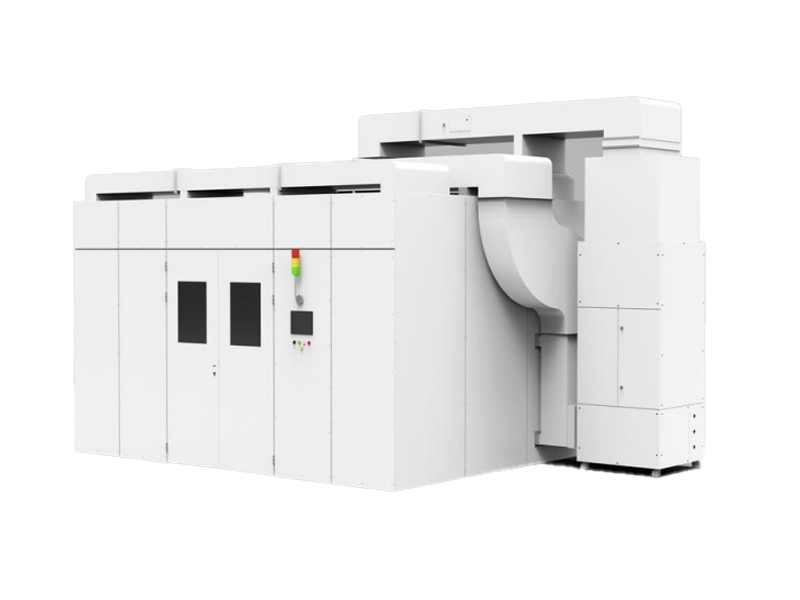
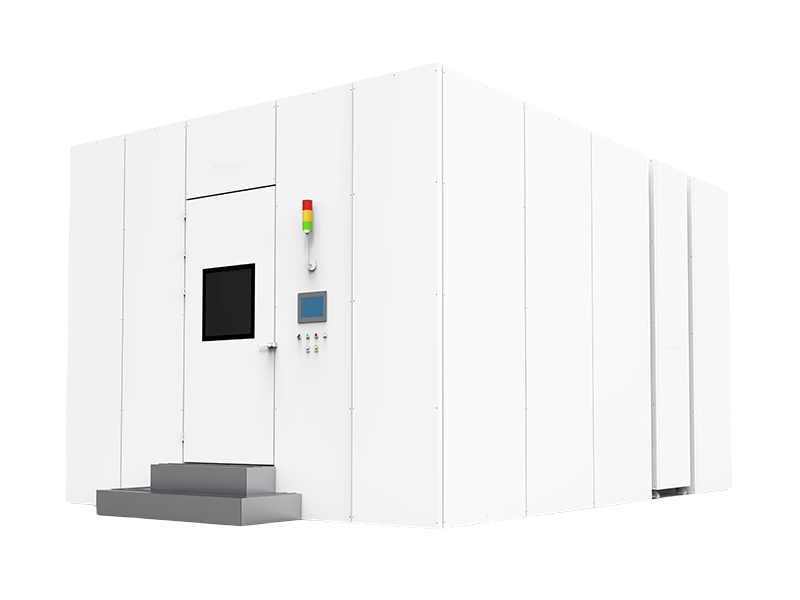
Jice (Nanjing) Technology Co., Ltd. With a long-term focus on precision environmental control, UPECS—a high-precision environmental control system—has been developed to meet the localized microenvironmental requirements of advanced equipment. Designed for applications with stringent demands on temperature, humidity, and cleanliness, the system’s key performance metrics can reach Temperature stability: ±0.002°C; humidity stability: ±0.1% RH; cleanliness: ISO Class 1.

The high-precision environmental control system, UPECS, is not merely about controlling individual environmental parameters; it is designed to provide a sustainable, verifiable, and all‑dimensional operating environment for equipment. When high‑precision host systems are paired with this advanced environmental control solution, the resulting environmental conditions can more reliably support machining, measurement, and testing processes.
For users, the key concerns are whether the entire system can meet the equipment’s operational requirements, maintain stable performance over long-term operation, pass on-site acceptance testing, and adapt to subsequent process changes. The engineering value of high-precision environmental control systems is precisely validated under these real-world conditions.
Jice (Nanjing) Technology Co., Ltd. will continue to focus on product development centered around the indicator stability, equipment compatibility, and engineering delivery capabilities of high-precision environmental control systems, providing precision environmental control solutions for high-end equipment that better meet the demands of real-world processes. Only by ensuring that environmental control is truly implemented at the equipment perimeter and directly at the process site can the design performance of domestically produced equipment be more reliably translated into practical capabilities that are operable, verifiable, and sustainably maintainable.




Here is the title one h1 placeholder text
More news

Service Hotline
E-mail:info@jicenj.com
Address: Block D, Tengfei Building, 88 Jiangmiao Road, Yanchuang Garden, Jiangbei New District, Nanjing City
Copyright © 2024 JICE(Nanjing) Technology Co., LTD