

Jice UPECS High-Precision Environmental Control System: Ensuring Environmental Stability for Nanoscale Thin-Film Measurements
Release time:
2026-09-29
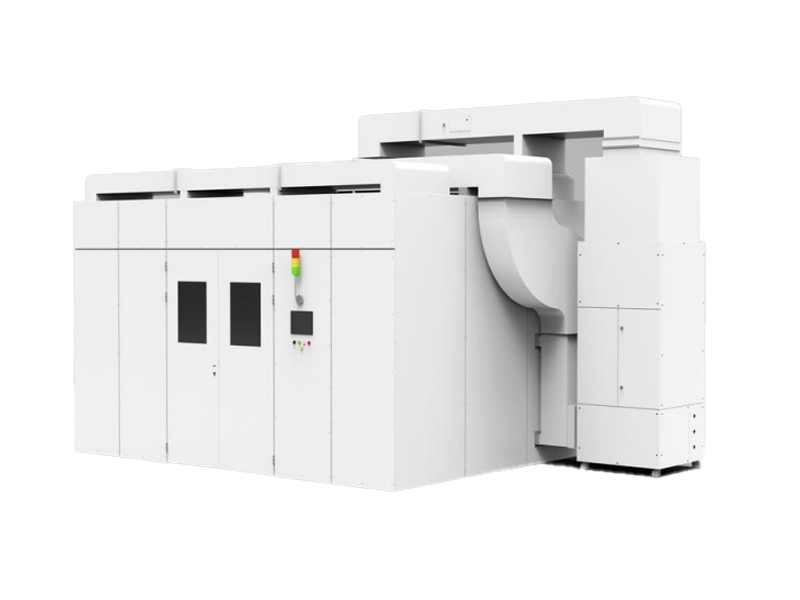
Jice has launched the high-precision environmental control system UPECS, which effectively minimizes the impact of environmental disturbances on thin-film measurements.
In the research and development of semiconductors, optical components, display panels, and advanced materials, thin-film thickness, refractive index, extinction coefficient, and film‑layer uniformity are critical parameters for characterizing the optical and structural properties of thin films. As thin‑film architectures become increasingly complex and film thicknesses shrink to the nanometer or even sub‑nanometer scale, the sensitivity of measurement signals to environmental disturbances rises markedly.
Environmental Sensitivity Mechanisms in Thin-Film Measurements
Thin-film measurements typically rely on optical techniques such as ellipsometry, spectroscopic reflectance, and interferometry, in which the film thickness and optical constants are retrieved by analyzing the polarization state, reflectance, or interference signals. Temperature variations not only induce thermal expansion in both the sample and the substrate but also alter the refractive indices of the materials and that of air, while causing thermomechanical deformation of the instrument’s optomechanical components, leading to optical path drift. Furthermore, continuous heat dissipation from components like the light source, motor, and controller can generate localized temperature gradients and airflow disturbances near the sample stage and the measurement optical path.
This is also a common source of data drift: the same sample yields biased measurements at different times; data are inconsistent before and after equipment warm-up; measurement results exhibit systematic shifts between morning and afternoon; and repeatability deteriorates markedly after shift changes or personnel turnover.
The core issue is not the setpoint of the room temperature, but rather whether the temperature stability, spatial uniformity, and airflow disturbances in the critical measurement zone are adequately controlled. Conventional comfort‑oriented air conditioning systems prioritize occupant comfort and the average room temperature; their control cycles, supply‑air velocities, spatial temperature gradients, and airflow patterns typically fall short of meeting the stringent requirements of high‑precision thin‑film measurements. Direct blowing can also introduce localized temperature fluctuations and micro‑airflow disturbances, thereby compromising the refractive index of the air and the stability of the optical path. For ultra‑thin films, small‑spot‑size samples, multilayer films, and specimens with high reflectance or high transmittance, additional perturbations—such as humidity, particulates, and vibrations—can likewise degrade measurement accuracy through moisture absorption, scattering, spot drift, or interference‑induced phase jitter.
Establish a stable microenvironment around the measurement area.
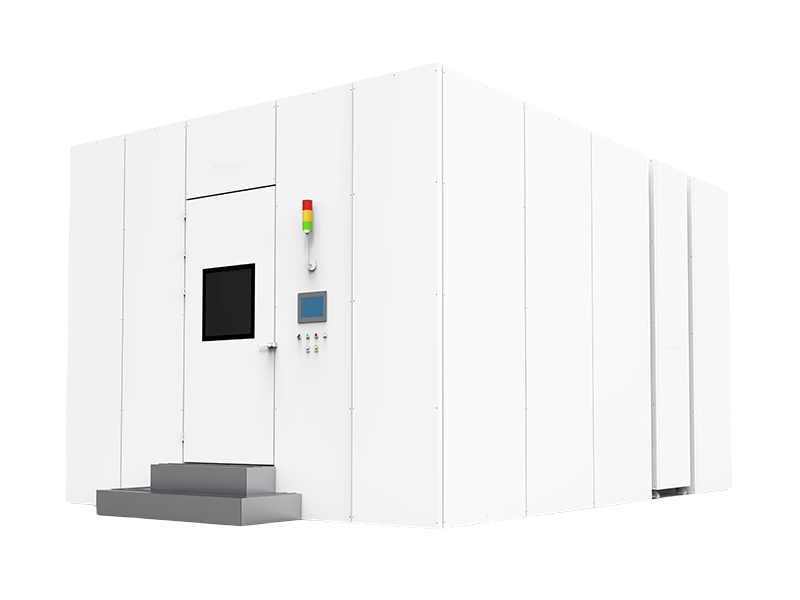
In response to these pain points, Jice (Nanjing) Technology Co., Ltd. Launch High-Precision Environmental Control System UPECS The system establishes a stable, precision microenvironment around the sample stage, measurement optical path, and critical operational areas of the thin-film metrology equipment, thereby minimizing the impact of external temperature and humidity fluctuations, device heat dissipation, and airflow disturbances on measurement results.

Jice designs environmental boundaries based on instrument architecture, heating components, sample loading/unloading methods, and operator workflows, while implementing precise control over supply‑air temperature, airflow velocity, and supply/return air paths. The uniformly distributed airflow gently traverses the controlled zone, efficiently removing heat generated by light sources, motors, and controllers, while preventing direct airflow onto samples and optical components. This approach minimizes localized hot spots, vertical temperature gradients, and periodic temperature fluctuations.
For wafers, optical films, and high-purity materials, a high-precision environmental control system. UPECS can also integrate humidity control, air filtration, and clean airflow management to minimize the impact of humidity fluctuations and particle deposition on sample surfaces and optical signals. Environmental data is continuously recorded, enabling trend analysis and anomaly alerts. When measurement data deviates, users can compare results with concurrent environmental profiles, facilitating faster identification of issues related to samples, instruments, or the environment, thereby reducing the need for repeated calibrations and ineffective retests.
Technical Specifications and Product Configuration
The ultra-high-precision environmental control system UPECS achieves a temperature stability of up to ±0.002℃ , with humidity stability as high as ±0.1%RH , with cleanliness levels as high as ISO Class 1 The system supports multi-point temperature and humidity monitoring, low‑disturbance airflow management, environmental data logging, and anomaly alarms. It can also tailor practical, site‑specific environmental control solutions to meet diverse application needs—ranging from single ellipsometers or film‑thickness meters to multiple devices, wafer handling requirements, ultra‑thin‑film and multilayer‑film processing, standard‑sample calibration, and high‑repeatability R&D metrology.
Jice has more than 20 years of expertise in precision environmental control technology. By synergistically managing temperature, humidity, cleanliness, and airflow, its high-precision environmental control systems… UPECS has helped numerous users mitigate the impact of environmental drift on thin-film measurements, enhancing data repeatability, reproducibility, and reliability, thereby establishing a stable environmental foundation for materials research and development, process optimization, and quality assessment.




Here is the title one h1 placeholder text
More news

Service Hotline
E-mail:info@jicenj.com
Address: Block D, Tengfei Building, 88 Jiangmiao Road, Yanchuang Garden, Jiangbei New District, Nanjing City
Copyright © 2024 JICE(Nanjing) Technology Co., LTD