

How can environmental stability be ensured in advanced packaging bonding processes? Jice’s UPECS offers high-precision, equipment‑level environmental control solutions.
Release time:
2026-10-09
Advanced packaging bonding requires a high-precision environmental control system, with careful monitoring of temperature, humidity, cleanliness, and airflow distribution to ensure process stability and interface quality.
With the growing demand for high‑bandwidth memory technologies such as chiplets, 2.5D/3D packaging, and HBM, coupled with advances in techniques like hybrid bonding, advanced packaging is evolving from traditional planar封装 and interconnects toward higher density, shorter interconnect lengths, and more complex heterogeneous integration. Whether it involves wafer‑to‑wafer (W2W) bonding, wafer‑to‑chip (W2C) bonding, or die‑to‑die (D2D) bonding, the stability of the process environment directly impacts alignment accuracy, bond‑interface quality, interconnect reliability, and overall product yield.
In advanced packaging bonding processes, temperature, humidity, cleanliness, airflow patterns, and vibration are not independent control parameters. Even minor fluctuations in ambient temperature can induce thermal expansion and contraction of wafers, stages, and equipment structures, thereby affecting bonding alignment; variations in humidity may, under specific material systems and surface‑treatment conditions, alter surface morphology, oxidation behavior, and interfacial adsorption characteristics; and airborne particulates can give rise to interfacial voids, localized lack of bonding, or reduced bond strength.
Therefore, advanced packaging bonding typically requires, in addition to conventional cleanrooms, the establishment of a high-precision, equipment-level environmental control system that defines stable boundary conditions around the bonding equipment’s process chamber and operational workspace.
Requirements for Equipment-Level Environmental Control in Advanced Packaging Bonding
Taking hybrid bonding, copper–copper direct bonding, thermocompression bonding, and micro‑bump bonding as examples, different processes typically involve steps such as surface treatment/activation, cleaning, alignment, pre‑bonding, thermocompression/reflow, and/or annealing; not all processes include both heating and pressing, nor do they all require subsequent thermal treatment. While each process step has its own specific sensitivities to environmental conditions, the following issues are of widespread concern.
First is thermal stability. Temperature differences among the bonding equipment itself, the wafer, the carrier structure, and the surrounding air can give rise to thermal stresses and dimensional drift. Particularly in high‑precision alignment and fine‑pitch interconnect applications, temperature control must account not only for whether the setpoint is achieved but also for long‑term operational fluctuations, spatial uniformity, and the system’s ability to recover after changes in thermal load.
Secondly, humidity and cleanliness must be carefully controlled. The bonding surfaces of wafers are highly sensitive to particulates, residues, oxide layers, and adsorbed water vapor or oxygen. For processes that are sensitive to humidity, relative humidity and dew point should be maintained within the process window—typically by employing a low-humidity, low‑dew‑point environment—and their stability and spatial uniformity must be closely monitored. Clean airflow helps minimize the risk of particle deposition. For hybrid bonding processes such as direct copper–copper bonding and dielectric‑layer bonding, equipment‑level environmental control must be integrated with the overall cleanroom environment, the equipment chamber, the local microenvironment, and the process gas delivery system.
Furthermore, the motion stages, optical alignment systems, and high-precision measurement components in bonding equipment are also highly sensitive to vibrations, air‑flow disturbances, and temperature gradients.
How UPECS Supports Advanced Packaging Bonding Applications
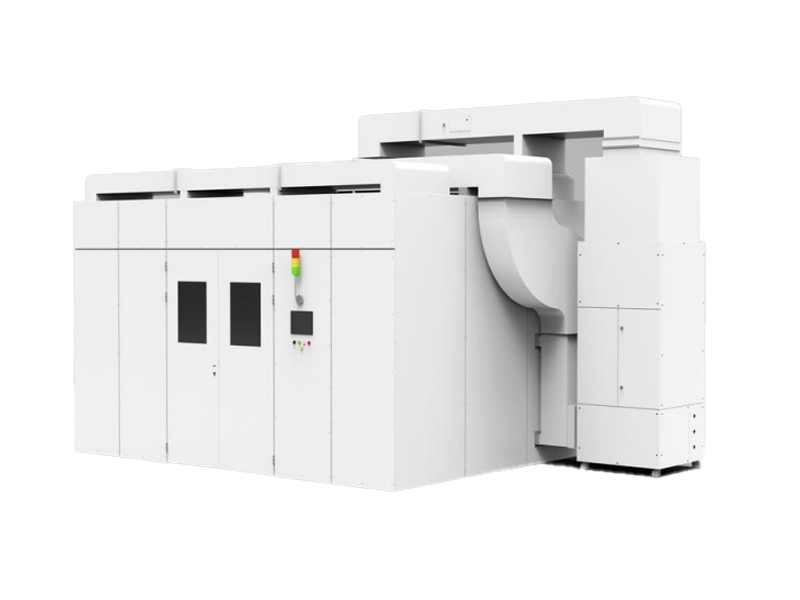
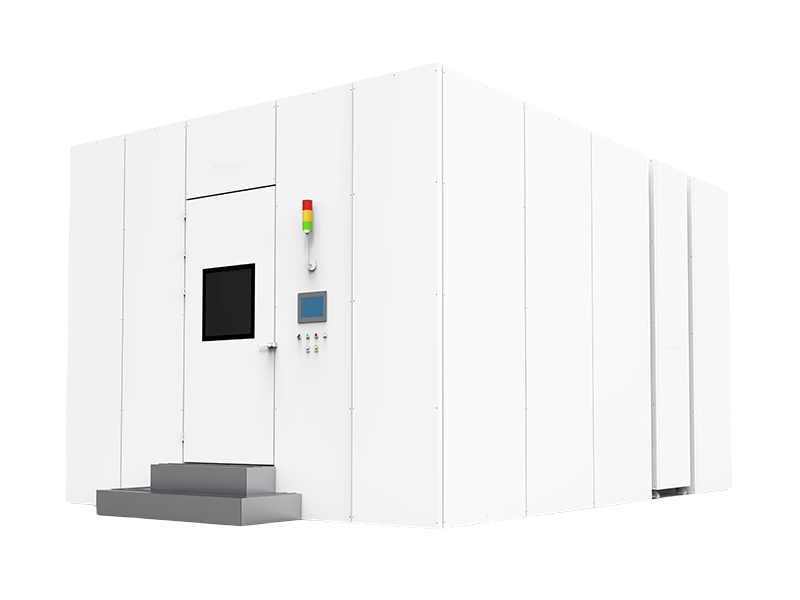
Jice (Nanjing) Technology Co., Ltd. High-Precision Environmental Control System UPECS , catering to the demands of high-precision manufacturing, precision metrology, and advanced process environments, it offers a systematic, equipment-level environmental control solution that encompasses air treatment, temperature and humidity regulation, cleanroom management, and equipment interface control.
UPECS is designed to meet the requirements of various advanced packaging processes, offering temperature stability as tight as ±0.002°C and humidity stability as precise as ±0.1% RH in critical zones, while supporting microenvironment control up to ISO Class 1 cleanliness.
In advanced packaging bonding applications, UPECS can design tailored, high-precision, equipment‑level environmental control units that align with customers’ process flows and equipment layouts, addressing bonding machines, wafer‑cleaning systems, surface‑activation tools, alignment stations, thermal‑processing equipment, and associated operational spaces. The system establishes stable temperature and humidity profiles as well as optimized clean‑air flow patterns around critical process zones, while factoring in equipment heat generation, exhaust requirements, and process‑gas replenishment to develop corresponding thermal‑load management and control strategies.
In terms of cleanliness control, UPECS can integrate the overall cleanroom environment with the specific microenvironmental requirements of equipment, thereby designing filtration, supply air, return air, and differential pressure control pathways to minimize the risk of particle deposition on critical surfaces.
Meanwhile, the layout of fans, compressors, and piping for HVAC equipment should be coordinated with equipment foundations and site conditions to minimize the impact of operational vibrations and airflow disturbances on precision alignment and measurement processes.
From “Temperature Control” to “Stabilizing the Bonding Process Window”
The value of advanced packaging bonding equipment’s high‑precision environmental control lies not in optimizing a single parameter, but in consistently and verifiably maintaining the process window. By delivering precise temperature and humidity regulation, clean airflow management, thermal load matching, vibration‑resistant design, and real‑time operational monitoring, UPECS helps customers minimize the impact of environmental fluctuations on bonding quality, providing a stable environmental foundation for processes such as wafer‑to‑wafer bonding, hybrid bonding, copper‑to‑copper bonding, micro‑bump bonding, and 3D integration.
For customers planning advanced packaging production lines, wire-bonding equipment laboratories, wafer-level packaging cleanrooms, or chiplet integration R&D platforms, Jice (Nanjing) Technology Co., Ltd. can, based on the equipment list, process temperature and humidity requirements, cleanliness class, facility infrastructure, and available site space, undertake the design and engineering implementation of high-precision, equipment‑level environmental control systems.
Building on conventional cleanroom‑wide control, UPECS places additional emphasis on equipment‑level microenvironment management for bonding machines, alignment tools, and related process units. By integrating equipment requirements with environmental control, UPECS strives to make advanced packaging bonding environments more stable and precisely controllable, while providing robust support for subsequent process scaling and production‑line operations.




Here is the title one h1 placeholder text
More news

Service Hotline
E-mail:info@jicenj.com
Address: Block D, Tengfei Building, 88 Jiangmiao Road, Yanchuang Garden, Jiangbei New District, Nanjing City
Copyright © 2024 JICE(Nanjing) Technology Co., LTD