

Ultra-Precision Polishing and High-Precision Environmental Control Solutions: How Jice’s UPECS Maintains Nanoscale Surface Quality
Release time:
2026-10-22
Ultra-precision polishing places extremely stringent demands on the environment. The Jice UPECS system, with its modular design and intelligent control, enhances environmental stability to ensure machining accuracy.
Environment: The “Invisible Process” of Ultra-Precision Polishing
Ultra-precision polishing aims for sub-nanometer surface roughness and nanometer‑level surface figure accuracy. When the machining scale enters this regime, environmental temperature fluctuations, particulate contamination, and airflow disturbances cease to be mere background conditions and instead become active factors that directly influence precision.
Temperature is the primary factor. During polishing, frictional heat between the workpiece and the abrasive tool, the rheological properties of the polishing slurry, and thermal deformation of the machine‑tool spindle can all compromise repeatability if ambient temperature fluctuates. For example, with ordinary steel, a 1°C change in temperature can cause dimensional variations of approximately 11 micrometers in a 1‑meter‑long component—enough to negate the nanometer‑level precision accumulated in preceding processes. Humidity is equally critical: high humidity can lead to condensation on optical surfaces and shifts in polishing‑slurry concentration, while low humidity readily generates static electricity that attracts fine particulates, leaving irreparable scratches on mirror‑like finishes. In terms of cleanliness, ultra‑precision polishing typically requires effective particle removal of particles ≥0.1 μm; otherwise, even a single dust particle entering the polishing zone can act as an abnormal abrasive or contaminant, compromising surface integrity.

JiCe UPECS: Upgrading Environmental Control from “Room-Level” to “Device-Level”
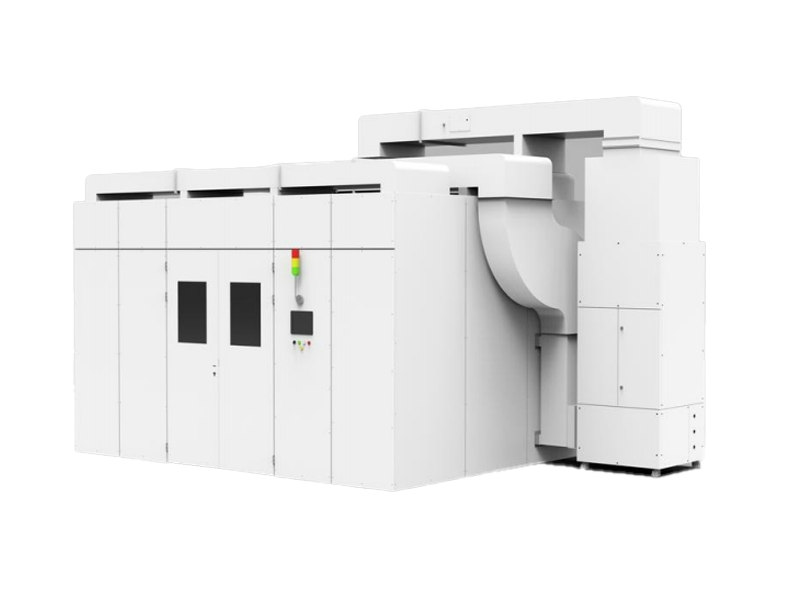
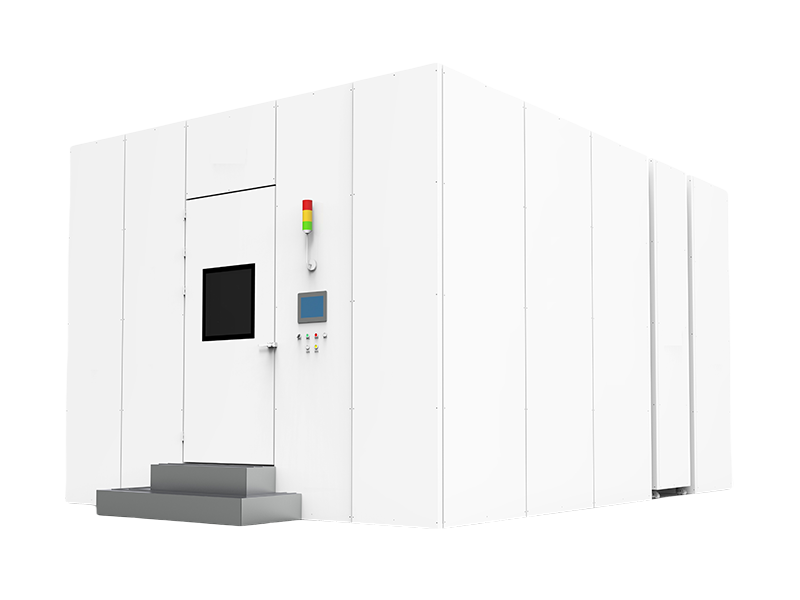
Developed independently by Jice (Nanjing) Technology Co., Ltd. High-Precision Environmental Control System UPECS (Ultra-Precision Environmental Control System) is an equipment-level environmental control solution specifically designed to meet this need.

In terms of core technical indicators, U Within the effective operating range, PECS achieves a maximum temperature stability of ±0.002 °C (±2 mK), a humidity stability of ±0.1 %RH, and a cleanliness level of ISO Class 1. This temperature-control precision elevates the industry’s mainstream ±0.01°C standard by an order of magnitude, directly addressing key requirements in ultra‑precision polishing, such as maintaining stable polishing‑fluid viscosity, eliminating temperature differentials between workpieces and gauges, and suppressing thermal deformation of machine tools.
From a system architecture perspective, UPECS employs a modular design that integrates the main cabinet, intelligent control system, airflow circulation system, clean filtration system, cooling/heating system, lighting system, and localized air‑bath module into a deeply interconnected, cohesive whole. This enables temperature, humidity, cleanliness, air pressure, and other multidimensional parameters to operate in concert within a unified framework, thereby preventing inconsistent environmental conditions caused by independent operation of individual subsystems. The vertical unidirectional airflow design, coupled with CFD‑based airflow simulation and optimization, ensures uniform temperature and humidity in the critical zone where polishing stations are located, eliminating local thermal gradients and particle deposition.
In terms of intelligent control, the system employs a patented multi‑stage temperature‑control technology that continuously collects environmental data and actively adjusts settings, effectively mitigating the common issues of temperature overshoot and oscillatory fluctuations inherent in conventional feedback‑based regulation. This ensures the stability and repeatability of long‑duration polishing processes. Historical trend curves for environmental parameters can be queried and exported, providing a solid foundation for process traceability and quality management.
Customization capabilities tailored for ultra-precision polishing applications
Ultra-precision polishing encompasses a variety of process routes, including chemical mechanical polishing (CMP), magnetorheological finishing (MRF), ion beam figuring (IBF), and float‑glass polishing, each exhibiting distinct sensitivities to environmental parameters. UPECS’s modular architecture enables on‑demand configuration: functional modules such as temperature and humidity stability ranges, cleanliness classes, and air‑pressure control can all be customized to meet the specific requirements of particular polishing equipment and processes.
For CMP processes, UPECS’s ±0.1% RH humidity control ensures stable polishing‑slurry evaporation rates and consistent chemical reaction kinetics. For vibration‑ and electromagnetic‑interference‑sensitive processes such as MRF and IBF, the system integrates micro‑vibration suppression into both its airflow management and structural design. For the polishing and in‑process metrology of large‑aperture optical components, millikelvin‑level temperature control and an ISO Class 1 cleanroom environment provide a robust foundation for repeatable interferometric measurements.
Environmental control is process capability.
In the field of ultra-precision polishing, environmental control is not a mere ancillary measure but an integral part of the process chain. Leveraging ±0.002°C temperature control, ±0.1% RH humidity control, and ISO Class 1 cleanliness as its benchmarks, Jice’s UPECS creates a repeatable, traceable, and customizable microenvironment for ultra-precision polishing equipment—ensuring that nanometer‑level machining accuracy is no longer achieved by chance due to environmental fluctuations, but instead becomes a stable, consistent process output.




Here is the title one h1 placeholder text
More news

Service Hotline
E-mail:info@jicenj.com
Address: Block D, Tengfei Building, 88 Jiangmiao Road, Yanchuang Garden, Jiangbei New District, Nanjing City
Copyright © 2024 JICE(Nanjing) Technology Co., LTD